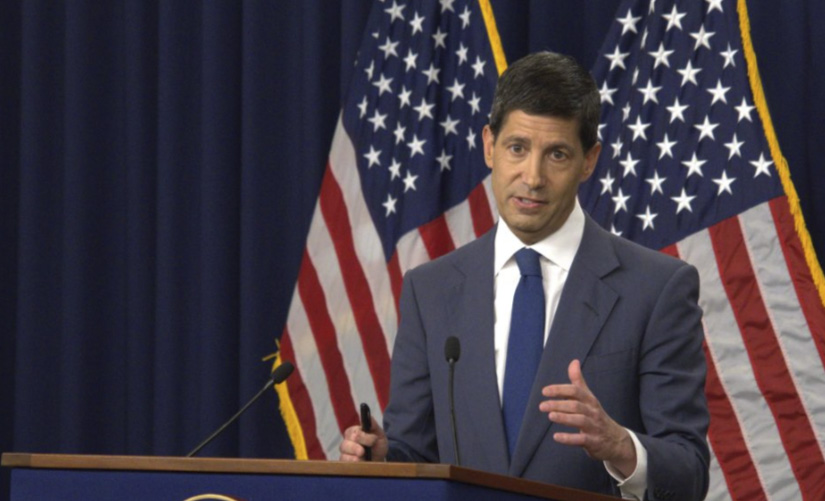
Washington, Sep 17 (SocialNews.XYZ) The US Federal Reserve has established a task force to examine how artificial intelligence could shape the economy and future monetary policy, with its findings expected by the end of the year, Chair Kevin Warsh said.
Warsh said the central bank was examining AI’s effects on both demand and supply. He left decisions on managing the technology’s broader risks and opportunities to other parts of the government.
The announcement came during a news conference following the Federal Open Market Committee’s unanimous decision to raise its benchmark interest rate by a quarter of a percentage point to 3.75–4 per cent.
“I care so much, I think it's so important, that we established a task force that should report by the end of the year to help us think about the implications for our future policy conjecture,” Warsh said.
He was responding to a question about warnings from AI industry leaders concerning the possibility of losing control of the technology and causing damage to the economy.
Warsh did not assess those warnings directly. Instead, he outlined the central bank’s responsibilities and distinguished its economic work from policy decisions taken elsewhere in government.
“We care very much about what's happening in artificial intelligence. We care much about the implications on the demand side of the economy and ultimately on the supply side of the economy.”
He said he had spent considerable time thinking about AI and discussing it publicly before becoming Fed chair.
“But the policy decisions that are made about the risks and rewards, the challenges and opportunities, those are decisions made by other parts of the government.”
Warsh gave no details about the task force’s membership, its specific research questions or whether its findings would be published. He also offered no estimate of AI’s contribution to economic growth or inflation.
His remarks placed the review within the Fed’s wider assessment of a strengthening US economy. Domestic spending remained resilient, productivity growth was strong, and capital investment was robust, he said.
Separately, Warsh identified a surge in capital spending as one reason longer-term US Treasury yields had risen. He said large technology infrastructure operators, often called hyperscalers, were raising funds and increasing competition for capital.
“The surge in capital expenditures, which I referenced in my remarks, is real and the so-called hyperscalers are out in the market raising funding.”
He listed economic strength and geopolitical developments as two other leading explanations for higher yields, while stressing that these were not the only factors.
The AI review comes as the Fed faces persistent inflation alongside a labour market that Warsh described as broadly consistent with full employment. He said inflation had remained above target for more than five years.
Asked later about bringing inflation down while AI was driving economic activity, Warsh did not offer a separate assessment of the technology’s effects. He said he did not believe the Fed needed to harm employment to achieve its inflation objective.
The Federal Reserve’s mandate from Congress centres on maximum employment and stable prices. Its longer-run inflation objective is 2 per cent, measured by the annual change in the personal consumption expenditures price index.
Source: IANS
Gopi Adusumilli is a Programmer. He is the editor of SocialNews.XYZ and President of AGK Fire Inc.
He enjoys designing websites, developing mobile applications and publishing news articles on current events from various authenticated news sources.
When it comes to writing he likes to write about current world politics and Indian Movies. His future plans include developing SocialNews.XYZ into a News website that has no bias or judgment towards any.
He can be reached at gopi@socialnews.xyz
This website uses cookies.


